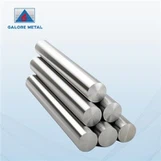
As a supplier of Exchanger Titanium Pipes, I understand the critical importance of inspection standards in ensuring the quality and performance of our products. In this blog, I will delve into the key inspection standards for Exchanger Titanium Pipes, providing valuable insights for both industry professionals and potential customers.
Material Quality Inspection
The foundation of high - quality Exchanger Titanium Pipes lies in the raw materials. Titanium is a unique metal known for its excellent corrosion resistance, high strength - to - weight ratio, and biocompatibility. For Exchanger Titanium Pipes, we typically use grades such as ASTM B338 Gr. 2, which is widely recognized for its good formability and corrosion resistance in various environments.
During the material quality inspection, we test the chemical composition of the titanium. The composition should strictly adhere to the specified standards. For example, in ASTM B338 Gr. 2, the titanium content should be at least 99%, with controlled amounts of other elements such as iron, carbon, nitrogen, and hydrogen. Any deviation from these specifications can significantly affect the performance of the pipes, such as reducing corrosion resistance or mechanical strength.
We also conduct mechanical property tests on the raw materials. Tensile strength, yield strength, and elongation are among the key parameters. For Exchanger Titanium Pipes, the minimum tensile strength for ASTM B338 Gr. 2 is usually around 345 MPa, and the minimum yield strength is about 275 MPa. These values ensure that the pipes can withstand the pressure and stress during operation in heat exchangers.
Dimensional Inspection
Accurate dimensions are crucial for Exchanger Titanium Pipes. They need to fit precisely into the heat exchanger systems. The most common dimensional parameters include outer diameter, wall thickness, and length.
The outer diameter of the pipes should be within a tight tolerance range. For example, if the specified outer diameter is 25mm, the tolerance might be ±0.2mm. Any significant deviation can lead to problems during installation, such as poor sealing or improper flow distribution within the heat exchanger.
Wall thickness is another critical dimension. Uniform wall thickness is essential for consistent heat transfer and pressure resistance. We measure the wall thickness at multiple points along the pipe's length and circumference to ensure it meets the specifications. The allowable variation in wall thickness is usually quite small, often around ±10% of the nominal wall thickness.
Pipe length is also carefully controlled. In the industrial context, the length of Exchanger Titanium Pipes is often specified according to the design requirements of the heat exchanger. Any variation in length can disrupt the installation process and affect the overall performance of the heat exchanger.
Surface Quality Inspection
The surface quality of Exchanger Titanium Pipes can have a profound impact on their performance. A smooth and clean surface not only improves heat transfer efficiency but also enhances corrosion resistance.
We check for surface defects such as scratches, cracks, and pits. Scratches can act as stress concentrators, increasing the risk of corrosion and premature failure. Cracks, even small ones, can propagate under pressure and lead to pipe rupture. Pits can also promote localized corrosion, reducing the service life of the pipes.
To ensure a high - quality surface, we use non - destructive testing methods such as visual inspection and magnetic particle inspection. Visual inspection is the most basic and can quickly identify obvious surface defects. Magnetic particle inspection is used to detect surface and near - surface defects in ferromagnetic materials, which can be very effective for detecting small cracks.
Weld Quality Inspection (if applicable)
Some Exchanger Titanium Pipes are welded. In such cases, weld quality inspection is of utmost importance. Welding can introduce impurities and defects that may compromise the integrity of the pipes.
We first check the weld geometry. The weld bead should have a uniform width and height, and there should be no undercut or excessive reinforcement. Undercut can reduce the cross - sectional area of the pipe, leading to decreased strength, while excessive reinforcement can cause flow resistance and non - uniform heat transfer.
We also use non - destructive testing methods to evaluate the internal quality of the welds. Radiographic testing (RT) and ultrasonic testing (UT) are commonly used. RT can detect internal defects such as porosity, lack of fusion, and cracks by passing X - rays or gamma rays through the weld. UT uses high - frequency sound waves to detect internal flaws based on the reflection of the waves.
In addition to non - destructive testing, we may also perform destructive testing on a sample of welded pipes. This includes cross - sectioning the weld and examining it under a microscope to evaluate the microstructure and the presence of any metallurgical defects.
Pressure Testing
Pressure testing is a crucial step to ensure the integrity of Exchanger Titanium Pipes under operating conditions. The pipes are filled with a test fluid, usually water, and pressurized to a specified level.
The test pressure is typically higher than the maximum operating pressure of the heat exchanger to ensure a sufficient safety margin. For example, if the maximum operating pressure of the heat exchanger is 10 MPa, the test pressure might be set at 1.5 times the operating pressure, i.e., 15 MPa.
During the pressure test, the pipes are monitored for any signs of leakage, deformation, or failure. If any leakage is detected, the pipes need to be repaired or rejected. The duration of the pressure test also varies depending on the standards and requirements, generally ranging from a few minutes to half an hour.
Traceability and Documentation
To ensure the quality and reliability of our Exchanger Titanium Pipes, we maintain strict traceability and documentation. Each pipe is marked with a unique identifier that allows us to trace its production history, including raw material source, manufacturing process, and inspection results.
We also provide detailed documentation to our customers, including material test reports, inspection certificates, and dimensional reports. These documents serve as evidence of the quality of the pipes and provide important information for installation, operation, and maintenance.
Conclusion
In conclusion, the inspection standards for Exchanger Titanium Pipes cover a wide range of aspects, from material quality and dimensional accuracy to surface quality, weld quality (if applicable), pressure testing, and traceability. By adhering to these strict inspection standards, we can ensure that our Exchanger Titanium Pipes meet the highest quality requirements and provide reliable performance in heat exchanger applications.
If you are in the market for high - quality Exchanger Titanium Pipes or related products such as Titanium Seamless Coil Tubing and Titanium Welded Fitting 45 Degree Elbow, we are here to serve you. Our commitment to quality and customer satisfaction makes us a trusted partner in the industry. We welcome you to contact us for more information and to discuss your specific requirements.


References
- ASTM B338 Standard Specification for Seamless and Welded Titanium and Titanium - Alloy Tubes for Condensers and Heat Exchangers.
- ASME Boiler and Pressure Vessel Code, Section VIII, Division 1, Pressure Vessels.
- R.W. Hertzberg, “Deformation and Fracture Mechanics of Engineering Materials”.