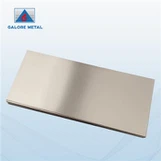
As a supplier of Gr2 Titanium Standard Plate, I've often been asked about the potential applications of this material in various industries, especially the electronic sector. In this blog, I'll delve into the properties of Gr2 Titanium Standard Plate and explore whether it can be effectively used in electronic industries.
Properties of Gr2 Titanium Standard Plate
Chemical Composition
Gr2 titanium is an unalloyed titanium grade. It primarily consists of titanium with a small amount of iron (up to 0.30%), oxygen (up to 0.25%), carbon (up to 0.10%), nitrogen (up to 0.03%), and hydrogen (up to 0.015%). This relatively pure composition gives it some unique properties.
Physical Properties
- Low Density: Titanium has a density of about 4.51 g/cm³, which is much lower than that of steel. This low density makes it an attractive option for applications where weight reduction is crucial, such as in portable electronic devices.
- High Strength - to - Weight Ratio: Despite its low density, Gr2 titanium has good strength. It can withstand significant stress without excessive weight, which is beneficial for maintaining the structural integrity of electronic components.
- Corrosion Resistance: Gr2 titanium forms a passive oxide layer on its surface, which provides excellent resistance to corrosion. This is particularly important in electronic applications as it can protect the components from damage caused by environmental factors such as moisture and chemicals.
Mechanical Properties
- Ductility: Gr2 titanium is highly ductile, which means it can be easily formed into various shapes. This property allows for the manufacturing of complex electronic parts with precision.
- Good Weldability: It can be welded using common welding techniques, enabling the assembly of different components in electronic devices.
Applications of Gr2 Titanium Standard Plate in Electronic Industries
Casings and Enclosures
One of the most obvious applications of Gr2 Titanium Standard Plate in the electronic industry is for casings and enclosures. The low density and high strength - to - weight ratio make it an ideal material for protecting internal electronic components while keeping the overall weight of the device down. For example, in laptops and smartphones, a titanium casing can provide a durable and lightweight solution. The corrosion resistance also ensures that the casing remains in good condition over time, even in harsh environments.
Heat Sinks
Heat management is a critical aspect of electronic devices. Gr2 titanium has relatively good thermal conductivity, which makes it suitable for use as a heat sink. Heat sinks are used to dissipate heat generated by electronic components such as processors. The ability of Gr2 titanium to transfer heat efficiently can help in maintaining the optimal operating temperature of the device, thereby improving its performance and lifespan.
Connectors and Contacts
In electronic circuits, connectors and contacts need to have good electrical conductivity and corrosion resistance. While titanium is not as conductive as copper or silver, Gr2 titanium can still be used in certain applications. For example, in some high - reliability electronic systems where corrosion resistance is more important than absolute conductivity, titanium connectors can be used. The passive oxide layer on the surface of Gr2 titanium can prevent oxidation and ensure stable electrical connections over time.
EMI Shielding
Electromagnetic interference (EMI) can cause malfunctions in electronic devices. Gr2 titanium can be used to create EMI shielding structures. Titanium has the ability to absorb and reflect electromagnetic waves, which helps in reducing the interference between different electronic components. This is particularly important in sensitive electronic systems such as medical devices and aerospace electronics.


Comparison with Other Titanium Products
When considering the use of Gr2 Titanium Standard Plate in the electronic industry, it's also important to compare it with other titanium products. For example, the Gr5 Ti6Al4v Titanium Alloy Sheet is a popular titanium alloy. Gr5 titanium has higher strength compared to Gr2, but it is also more expensive. In some electronic applications where high strength is not the primary requirement, Gr2 titanium can be a more cost - effective option.
The Titanium Coil Strip is another product. Gr1 titanium has even lower strength than Gr2 but higher ductility. If the application requires extensive forming, Gr1 titanium coil strip might be considered. However, for applications where a balance of strength and ductility is needed, Gr2 Titanium Standard Plate is a better choice.
The Titanium Tubing Plate is often used in applications where a tubular or plate - like structure is required. While it has its own unique applications, Gr2 Titanium Standard Plate can be more versatile in terms of shaping and can be used for a wider range of electronic components.
Challenges and Limitations
Despite its many advantages, there are also some challenges and limitations when using Gr2 Titanium Standard Plate in the electronic industry.
Cost
Titanium is generally more expensive than other common metals used in electronics, such as aluminum and copper. This can increase the overall cost of the electronic device. However, in some high - end or specialized applications, the benefits of using titanium may outweigh the cost.
Machinability
Although Gr2 titanium is ductile, it can be more difficult to machine compared to other metals. Specialized machining techniques and tools are often required, which can add to the manufacturing cost and time.
Electrical Conductivity
As mentioned earlier, titanium is not as conductive as some other metals. In applications where high electrical conductivity is essential, additional measures may need to be taken, such as coating the titanium with a more conductive material.
Conclusion
In conclusion, Gr2 Titanium Standard Plate can definitely be used in the electronic industry. Its unique combination of properties such as low density, high strength - to - weight ratio, corrosion resistance, and good formability make it suitable for a variety of applications including casings, heat sinks, connectors, and EMI shielding. While there are some challenges and limitations, with proper design and manufacturing techniques, these can be overcome.
If you are in the electronic industry and are interested in using Gr2 Titanium Standard Plate for your products, I encourage you to reach out for a detailed discussion. We can provide you with high - quality Gr2 Titanium Standard Plate and work together to find the best solutions for your specific needs.
References
- "Titanium: A Technical Guide" by J. R. Davis
- "Handbook of Electronic Packaging Technology" by C. P. Wong