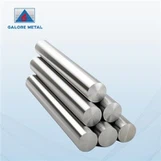
As a supplier of 4928 Titanium Bar, I often receive inquiries about the most suitable welding methods for this specific type of titanium bar. Welding 4928 Titanium Bar requires careful consideration due to the unique properties of titanium, such as its high reactivity at elevated temperatures and its tendency to form brittle intermetallic compounds. In this blog post, I will discuss several welding methods that are well - suited for 4928 Titanium Bar and explain the advantages and limitations of each.
Gas Tungsten Arc Welding (GTAW)
Gas Tungsten Arc Welding, also known as Tungsten Inert Gas (TIG) welding, is one of the most popular methods for welding titanium bars, including the 4928 Titanium Bar. This process uses a non - consumable tungsten electrode to produce the weld. An inert gas, typically argon, is used to shield the weld area from atmospheric contamination.
Advantages
- High - quality welds: GTAW produces clean, high - quality welds with excellent mechanical properties. The precise control of the heat input allows for fine - tuned welding, which is crucial when working with titanium to avoid overheating and the formation of brittle phases.
- Suitable for thin and thick materials: It can be used to weld a wide range of thicknesses of 4928 Titanium Bar, from thin sheets to relatively thick bars.
- Minimal spatter: There is little to no spatter during the welding process, which reduces post - weld cleaning requirements.
Limitations
- Slow process: GTAW is a relatively slow welding method, which can increase production time and cost for large - scale projects.
- Skilled operator required: It demands a high level of skill from the welder to maintain a stable arc and proper shielding gas flow.
Gas Metal Arc Welding (GMAW)
Gas Metal Arc Welding, or Metal Inert Gas (MIG) welding, is another option for welding 4928 Titanium Bar. In this process, a consumable wire electrode is fed through a welding gun, and an inert gas is used to protect the weld pool.
Advantages
- Higher deposition rate: GMAW has a higher deposition rate compared to GTAW, which means it can deposit more filler metal in a shorter time. This makes it more suitable for high - volume production.
- Easier to automate: It is relatively easier to automate the GMAW process, which can improve productivity and consistency in large - scale manufacturing.
Limitations
- Greater risk of contamination: There is a higher risk of atmospheric contamination during GMAW compared to GTAW. Special care must be taken to ensure proper shielding gas coverage to prevent oxidation and the formation of brittle compounds.
- More complex equipment: The equipment for GMAW is more complex than that for GTAW, which may require additional training for operators.
Electron Beam Welding (EBW)
Electron Beam Welding is a high - energy welding process that uses a focused beam of electrons to melt the metal. This method is particularly suitable for welding 4928 Titanium Bar in applications where high - precision and deep - penetration welds are required.


Advantages
- Deep penetration: EBW can achieve deep penetration with a narrow heat - affected zone. This is beneficial for welding thick 4928 Titanium Bars without excessive heat input to the surrounding material.
- High - vacuum environment: The welding is typically carried out in a high - vacuum environment, which eliminates the risk of atmospheric contamination. This results in extremely clean and high - integrity welds.
- Precise control: The electron beam can be precisely controlled, allowing for welding in hard - to - reach areas and complex geometries.
Limitations
- High equipment cost: The equipment for electron beam welding is expensive, and the initial investment can be a significant barrier for small - scale manufacturers.
- Requires a vacuum chamber: The need for a vacuum chamber limits the size of the workpieces that can be welded and adds to the complexity of the process.
Laser Beam Welding (LBW)
Laser Beam Welding uses a highly focused laser beam to melt and join the metal. It is a versatile welding method that can be used for 4928 Titanium Bar in various applications.
Advantages
- High - speed welding: LBW is a very fast welding process, which can significantly reduce production time.
- Minimal heat - affected zone: The concentrated heat source results in a minimal heat - affected zone, reducing the risk of distortion and the formation of brittle phases in the titanium bar.
- Non - contact process: There is no physical contact between the welding equipment and the workpiece, which reduces the risk of contamination and damage to the material.
Limitations
- High initial cost: Similar to EBW, the cost of laser welding equipment is relatively high.
- Limited joint access: The laser beam needs a clear line of sight to the joint, which can be a limitation for complex geometries.
Resistance Welding
Resistance welding is a group of welding processes that use the heat generated by the resistance to electric current flow through the workpieces to create a weld. Spot welding and seam welding are common types of resistance welding that can be used for 4928 Titanium Bar.
Advantages
- Fast process: Resistance welding is a rapid welding method, which is suitable for high - volume production.
- No filler metal required: It does not require the use of filler metal, which can reduce costs and simplify the welding process.
Limitations
- Limited joint types: Resistance welding is mainly suitable for lap joints and is not as versatile as other methods for different joint configurations.
- High - power requirements: It requires a large amount of electrical power, which can increase energy costs.
When choosing a welding method for 4928 Titanium Bar, several factors need to be considered, such as the thickness of the bar, the joint design, the production volume, and the required weld quality. As a supplier of 4928 Titanium Bar, I can provide technical support and guidance to help you select the most appropriate welding method for your specific application.
If you are interested in our Titanium Alloy Bar 3D Printing, ASTM B348 Industrial Titanium Bar or Purity Medical Titanium Bar, please feel free to contact us for further details and to discuss your procurement needs. We are committed to providing high - quality products and excellent service to meet your requirements.
References
- "Welding of Titanium and Titanium Alloys" by John C. Lippold and David A. Koss.
- "Titanium: A Technical Guide" by Don Eylon.
- Various industry standards and research papers on titanium welding processes.