


Why Choose Us?
Quality Products
We use the most advanced technology in titanium production and testing equipment, the products produced comply with standards such as ASTM/ASME/DIN/JIS.
Rich Experience
We are a world-class leading supplier and manufacturer of high-quality titanium products with a history of 10 years.
Wide Range Of Products
Our products including plates/plates, tubes/tubes, fittings, rods/rods, wires, fasteners and forged parts, titanium containers , Heat exchanger equipment, etc. It also specializes in the machining and export of non-ferrous metals, such as zirconium, tantalum, niobium, nickel alloys, etc.
Reliable Service
"Based on honesty, innovation for far-reaching" Is the way we have been doing business for a long time, After ten years of accumulation, our sales network covers different regions of the world.
Titanium 6AL4V and 6AL4V ELI, alloys made of 6% Aluminum and 4% Vanadium, are the most common types of titanium used in medicine. Because of its harmonizing factor with the human body, these titanium alloys are popularly used in medical procedures, as well as in body piercings. Also known as Gr. 5 and Gr. 23.
Ti-6Al-4V and Ti-6Al-4V ELI offer greater fracture-resistance when used in dental implants. The implant procedure begins with the insertion of a titanium screw into the jaw. The screw resembles and acts like the root of the tooth. After an allotted amount of time has passed for the bone to have grown into the medical grade titanium screw, a fake tooth is connected to the implant.

Titanium Alloy Bar 3D Printing
We supply titanium and titanium alloy rods made by the plasma rotary electrode atomization method PREP for aerospace, shipbuilding, medical, etc., using the plasma atomization method for PA powdering, electron beam fuse deposition rapid prototyping EBF3, arc fuse gas GMAW and GTAW titanium and titanium alloy wire products.

Titanium-Zirconium-Niobium Alloy Rod
Medical titanium is used for medical devices. Ti13Nb13Zr is mainly used for surgical implantation of the human body, such as joint production and bolt production for human implantation.
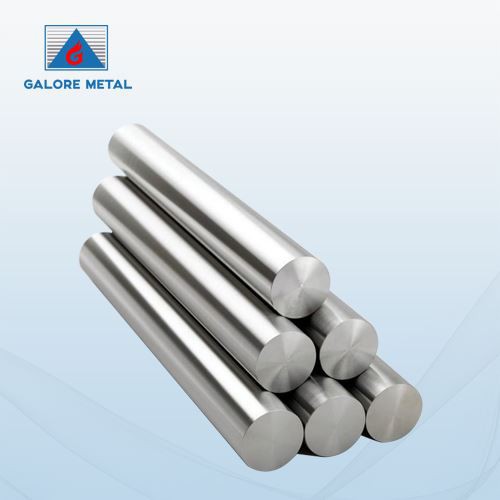
Medical titanium is used in medical devices, prostheses or auxiliary treatment equipment. It is characterized by its elastic modulus close to natural bone and is an indispensable metal material in medical treatment. Medical titanium plates are used to manufacture titanium alloys for medical devices implanted in the human body, prostheses or artificial organs and auxiliary treatment equipment.

Worldwide, 50% of titanium materials are used in the aviation field. At present, most high-speed aircraft in the world use titanium alloys as structural materials.
Our aviation titanium rods have undergone strict manufacturing and inspection processes and have been long-term supplied to China's Chengfei, Xi'an and other aircraft manufacturers. The quality of the materials has been rigorously tested to ensure that it is foolproof.

ASTM B348 Industrial Titanium Bar
Titanium rods are widely used in the global industrial field. We will keep most of the specifications of industrial titanium rods in stock. You can contact us to get the inventory list. Special specification titanium rods need to be customized, but it will not take too long. Please rest assured to place an order.

Medical titanium rods have low density, light weight, high strength, good corrosion resistance, high temperature resistance, and low temperature resistance. It is a very good material. As an emerging material, medical titanium rods have been used in the global pharmaceutical industry, surgical instruments, human implants and other medical fields for decades and have achieved great success.

The Titanium Hex Bar and square bar for Sale contains a certain amount of elements that stabilize the alpha phase, and are mainly composed of the alpha phase in equilibrium. In addition, it has the advantage of small specific gravity, good thermal strength, good weldability and so on. There are various kinds of size options, thus to provide more choices to meet need. Due to the proper size and compact design, it is really easy for use and there is no special need of maintaining.

Russian Standard Titanium Alloy Rod
Bt22 titanium alloy is a Russian standard grade, and the composition is Ti5Al5Mo5V1Cr1Fe.BT22 titanium alloy can be welded in various ways and has good welding performance after annealing. Mainly used in aircraft structure, landing gear and other large load-bearing structural parts. The alloy is generally used in a double-annealed state, and it can also be strengthened by solution aging. The BT22 titanium alloy materials we can supply mainly include plates, bars, tubes, fasteners, extruded profiles and forgings.

Titanium foil is a titanium plate, strip, roll or sheet with a thickness of 0.1 mm or less. Another indicator for evaluating the thickness of titanium foil is the weight per unit area, such as g/m or oz/fi. The larger the value, the greater the thickness. The width of the titanium foil is cut according to the user's requirements. However, the larger the width during manufacturing, the higher the productivity.
There are three types of dental implant: osseointegrated, mini-implant for orthodontic anchorage, and zygomatic. Titanium has been used as crowns, crown nails, fixed bridges, porcelain bridges, adhesive bridges, denture retaining rings, bases, connecting devices and strengthening devices. Almost all metal parts of dentures have been covered by titanium.
First, doctor will put a root' or "seed" into the jaw bone. After it settles down, the superstructure of the tooth will bond with the implant. Then new tooth will grow on top of it. Here is the difference between medical implant and dental implant. Medical implant is a replacement of failed hard tissue or a "glue" or "screw" to connect broken hard tissue. But dental implant helped new structure to grow. How fascinating!
Titanium has very low thermal expansion. When titanium-based implant used as a "root", it won't expand or shrink inside people's mouth. The newly formed tooth will stay where it should be. Titanium has very low thermal conductivity, only 1/5 of stainless steel, 1/3 of aluminum and 1/2 of copper. When used as crown, it won't transfer to real teeth structure. Titanium can protect the dental pulp from heat and cold stimulations.
In dental field, precision casting titanium has the characteristics of high dimensional accuracy, no bubbles and shrinkage. Currently, 4 commercially pure titanium (Cp Ti) are specially used for dental implant applications. They are ASTM grades 1 to 4. They all have low level of electronic conductivity, high corrosion resistance, thermodynamic state at physiological pH values, low ion-formation tendency in aqueous environments and isoelectric point of the oxide of 5-6.
From grade 1 to 4, purity decrease and strength increase. Grade 2 titanium is the most popular star for dental implant applications. It has minimum yield strength of 275 MPa which is comparable to annealed austenitic stainless steels. When require higher strength, titanium alloy can also be applied. Ti-6Al-4V and other alloy are also used in various situations.
Purity Medical Titanium Bar's Life-Saving Qualities
There is far more to titanium bar than its strength, although that certainly is one of its most crucial features. Following is an overview of its qualities and how they can make a difference to medical providers:
Strength: Few materials can compare to titanium's durability. This is extremely important when it is used for implants, such as hip joints or knee replacements. These inserts must be able to support a person's weight without bending or otherwise deforming. Titanium bar has proven to be just as strong as stainless steel, but with additional benefits the latter cannot provide.
Biocompatibility: Whenever a device is implanted into the body, the body's acceptance of the foreign object is of the highest importance. Materials that do not interact well with the immune system or those that leech toxic substances put patients at severe risk. Fortunately, medical titanium bar is exceptionally biocompatible, which means it should not have a negative impact on human tissue.
Weight: Compared to stainless steel and other metals, titanium weighs much less while providing many of the same advantages. This leads to implants that feel more natural to the patient and don't contribute excessive weight that could lead to strain or fatigue.
Flexibility: Although its primary quality is strength, titanium does bring a significant amount of flexibility and elasticity to the table that make it a useful substitute for natural bone. This means replacement titanium components should behave more or less the same as the original bones inside the body.
Osseointegration: Unlike many other materials, no adhesives are required to bond titanium to bones. Its unique ability to bind with the skeletal system helps create a stronger connection. With titanium, patients don't have to worry as much about breakage, and the implants tend to last longer.
MRI-Safe: Because it is non-magnetic, titanium is safe to use around MRI equipment. The powerful magnetic fields that these machines generate could pull stainless steel or other types of implants out of patients' bodies, causing serious injuries. Not so with titanium.
Durability: Naturally resistant to corrosion and regular wear and tear, titanium can last 20 years or longer inside the human body. This means patients should undergo fewer surgeries related to their implants over the course of their lives.
Purity Medical Titanium Bar–Tissue Interface Reaction and Its Control With Surface Treatment
Medical titanium bars are widely used for medical and dental implant devices-artificial joints, bone fixators, spinal fixators, dental implant, etc. -because they show excellent corrosion resistance and good hard-tissue compatibility (bone formation and bone bonding ability). Osseointegration is the first requirement of the interface structure between titanium and bone tissue. This concept of osseointegration was immediately spread to dental-materials researchers worldwide to show the advantages of titanium as an implant material compared with other metals. Since the concept of osseointegration was developed, the cause of osseointegration has been actively investigated. The surface chemical state, adsorption characteristics of protein, and bone tissue formation process have also been evaluated. To accelerate osseointegration, roughened and porous surfaces are effective. HA and TiO2 coatings prepared by plasma spray and an electrochemical technique, as well as alkalinization of the surface, are also effective to improve hard-tissue compatibility. Various immobilization techniques for biofunctional molecules have been developed for bone formation and prevention of platelet and bacteria adhesion. These techniques make it possible to apply Ti to a scaffold of tissue engineering. The elucidation of the mechanism of the excellent biocompatibility of Ti can provide a shorter way to develop optimal surfaces.
What Is Medical Titanium Bar over Implant
A medical titanium bar is a component used in implant-supported dental restorations, particularly in cases where multiple implants are placed to support a full arch of teeth. The titanium bar is a framework or substructure that is placed over the dental implants and serves as a foundation for attaching the final prosthetic restoration, such as crowns or overdentures.
Material: The medical titanium bar is typically made from medical-grade titanium, which is biocompatible and has excellent osseointegration properties. Titanium is commonly used in dental implants due to its strength, durability, and compatibility with oral tissues.
Implant Support: Medical titanium bar is designed to distribute the chewing forces evenly across the dental implants, reducing stress on individual implants and promoting long-term stability. It provides a solid support structure for the final prosthetic restoration.
Attachment of Prosthetic Teeth: The medical titanium bar is custom-made to fit the patient's mouth and is attached to the dental implants via screws or other securing mechanisms. The prosthetic teeth, such as crowns or dentures, are then attached to the bar using various attachment methods, such as clips, screws, or cement.
Stability and Function: The titanium bar enhances the stability and function of the implant-supported restoration. It helps to minimize movement or shifting of the prosthetic teeth, improving chewing efficiency and overall oral function.
Aesthetics: In cases where the medical titanium bar is used in implant-supported overdentures or full-arch restorations, it can provide additional support for the acrylic or composite material used to create natural-looking gums and teeth. This contributes to improved aesthetics and a more natural appearance.
Properties of Purity Medical Titanium Bar
Titanium bar is a widely used metal in the field of medical science, with a range of applications in the development of medical grade materials. It has many unique properties that make it an ideal material for medical implants and devices:
Biocompatibility
One of the key properties of titanium bar that makes it suitable for use in medical implants is its biocompatibility. This means that the metal does not cause an adverse reaction when it comes into contact with living tissue, making it an excellent choice for implantable medical devices such as orthopedic implants, dental implants, and pacemaker casings. The human body also readily accepts titanium bar, which, together with its inherent ability to promote osseointegration (bone growth), makes it ideal for use in medical implants that need to remain in place for extended periods of time.
Corrosion Resistance
Titanium bar has excellent corrosion resistance, which is critical in medical applications. When medical devices are implanted into the human body, they are exposed to bodily fluids that can be highly corrosive. titanium bar's resistance to corrosion ensures that the implant remains stable and does not degrade over time. This means that the implant can remain in the body for extended periods without causing any adverse effects.
Strength & Durability
Another advantage of titanium bar is its strength and durability. Medical implants made from titanium bar can withstand the wear and tear of daily use, which is essential for devices such as hip implants and dental implants. The metal also has excellent fatigue strength, which means that it is less likely to crack or break under the stresses of daily use.
Resistance to High Temperature
Titanium bar medical instrumentstitanium bar is highly resistant to high temperatures, which is important for certain medical applications. For example, titanium bar is used in the manufacture of surgical instruments that need to be sterilized at high temperatures. The metal's ability to withstand high temperatures without corroding or degrading makes it ideal for this purpose.
Lightweight
Titanium bar is 45% lighter than steel and has a modulus of elasticity comparable to bone, which is a significant advantage in the development of medical implants. The weight of an implant can place a significant strain on the body, particularly if it is a weight-bearing implant such as a hip replacement. titanium bar's favorable weight to strength ratio means that it can be used to develop implants that are strong and durable, but still lightweight and suitable for the body to support.
The use of titanium bar in medical grade materials has revolutionized the field of medical science. The metal's unique properties, including its biocompatibility, corrosion resistance, strength, durability, high-temperature resistance, and lightweight properties make it an ideal choice for use in medical implants and devices. The development of medical grade materials made from titanium bar has resulted in the creation of implants that are more durable, more effective, and safer than ever before, which has significantly improved the quality of life for patients around the world.
Positive Characteristics of Purity Medical Titanium Bar for Biomedical Implants
Titanium bar has many characteristics that make it the ideal metal for medical applications. Its advantages include:
Durability
Medical implants made from titanium alloys routinely last 20 or more years inside the human body.
Higher Strength-to-weight Ratio
Titanium is stronger and lighter than stainless steel, which largely accounts for its widespread use in surgical implants.
Non-ferromagnetic Property
Because it isn't magnetic, medical titanium doesn't interfere with magnetic resonance imaging (MRI) machines. Because of this property, patients with titanium implants can still safely undergo MRI examinations.
Biointerfacing
Titanium implants have an engineered biointerface with biomimetic motifs that increase cell contact area by as much as 75%, enhancing the cell's binding properties. As a result, their use further reduces the chance of implant rejection.
Biocompatibility
Unlike other metals, medical titanium can remain in constant contact with living tissue without adversely affecting it.
Osseointegration
Medical titanium implants can physically bond with natural bone, eliminating the need for adhesives.
Artificial Joint and Medical Implant: Purity Medical Titanium Bar
World population is getting older. We now live in a very active life and desire to be living longer. Injuries caused by hard sports, road traffic and other accidents are everywhere. Obviously, the demand of artificial joint continues to grow. Titanium and its alloys have been commonly used to fabricate implant devices such as: artificial hip joints, artificial knee joints, bone plates, screws for fracture fixation, cardiac valve prostheses, pacemakers and artificial hearts. Each year more than 100 million patients in the world received replacement therapy and more than 1,000 tones of titanium being implanted into patients' body worldwide.
Mechanically, these metal implants must be formed to certain shape and maintain functions during the usage period. Our daily activities include bending, twisting, squeezing and muscle contraction. These artificial parts must not be deteriorated when subjected to fatigue, abrasion and impact loads. Titanium has 50% less weight and 20% higher strength/density ratio of stainless steel. It is lighter and stronger. When implant inside human body, it will reduce body loads. Patients will feel more flexible and active. There will be stress between artificial part and human body. The so-called interface stress is caused by mismatch of elastic modulus. From table 1, we can see that titanium has lowest elastic modulus among these three materials. The mechanical compatibility of titanium implant and human bone is much better.
Physiologically, the body rejects foreign parts. When use stainless steel and co-alloy as biomaterials, clinical inflammation, redness, and itching often occur after implant operation. Titanium and titanium alloys are well known as biologically inert metal materials. In the immersion environment of human blood they have excellent corrosion resistance. It resists human blood and cell tissue very well, ensuring good compatibility. There is almost no pollution and allergic reactions, which greatly improves the patients' recovery. This is the basis for the widespread applications of titanium.
Our Factory
Galore Metal Technology is a world-class leading supplier and manufacturer of high-quality titanium products with a history of 10 years. We maintain a complete inventory and production capacity of titanium rolling mill products that comply with ASTM/ASME/DIN/JIS and other standards, including plates/plates, tubes/tubes, fittings, rods/rods, wires, fasteners and forged parts, titanium containers , Heat exchanger equipment, etc. It also specializes in the machining and export of non-ferrous metals, such as zirconium, tantalum, niobium, nickel alloys, etc.


FAQ
Q: What is medical grade titanium?
Q: What grade purity is titanium?
Q: What is medical grade titanium used for?
Q: Is medical grade titanium safe?
Q: What is medical titanium made of?
Q: What are the 4 grades of titanium?
Q: What is the highest quality titanium?
Q: How long does titanium last in your body?
Q: Is medical titanium bulletproof?
Q: Does medical grade titanium set off metal detectors?
Q: How do you clean medical grade titanium?
Q: Is medical grade titanium magnetic?
Q: Why do doctors use metals like titanium?
Q: Can medical titanium break?
Q: What makes titanium safer than other metals for use within the body?
Titanium also allows for osseointegration, which is the process of permanently fixing a titanium implant to the skeleton.
This type of procedure is particularly good for joint replacements or amputees because it helps to create a fixed anchor point, which a new limb could be attached – for example.
Q: How is titanium bar made?
Q: Is titanium suitable for sea water?
Q: How do you know if your body is rejecting titanium screws?
Q: Is titanium magnetic or not?
Q: Does cold weather affect titanium implants?
Hot Tags: purity medical titanium bar, China purity medical titanium bar manufacturers, suppliers, factory, Titanium Rods, , Titanium Alloy Bar 3D Printing


