Why Choose Us?
Quality Products
We use the most advanced technology in titanium production and testing equipment, the products produced comply with standards such as ASTM/ASME/DIN/JIS.
Rich Experience
We are a world-class leading supplier and manufacturer of high-quality titanium products with a history of 10 years.
Wide Range Of Products
Our products including plates/plates, tubes/tubes, fittings, rods/rods, wires, fasteners and forged parts, titanium containers , Heat exchanger equipment, etc. It also specializes in the machining and export of non-ferrous metals, such as zirconium, tantalum, niobium, nickel alloys, etc.
Reliable Service
"Based on honesty, innovation for far-reaching" Is the way we have been doing business for a long time, After ten years of accumulation, our sales network covers different regions of the world.
Medical small diameter titanium tube has been used for decades in the pharmaceutical industry, surgical instruments, human implants and other fields and the world, and has achieved great success. Medical grade titanium tube is used in medical devices, prostheses or adjuvant therapeutic devices, characterized by an elastic modulus close to that of natural bone.

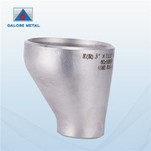
Titanium pipe fittings have excellent corrosion resistance in acid, alkali and salt liquids. Scale will not be deposited on the inner surface, has a long service life and is easy to clean. Widely used in petroleum, chemical industry, metallurgy, chemical fiber, chlor-alkali, marine engineering, seawater desalination, sewage treatment and other fields

itanium Elbow 90 Degree Seamless
Titanium elbows are pipe fittings that change the direction of the pipeline in the pipeline system. According to the angle, there are three commonly used elbows of 45, 90, and 180 degrees, and other abnormal angle elbows such as 60 degrees are also included according to engineering needs. The seamless elbow made with Seamless extrusion, lathe processing. Packed in wooden boxes, convenient for long-distance transportation

Titanium Welded Fitting 45 Degree Elbow
Titanium elbows are pipe fittings that change the direction of the pipeline in the pipeline system. According to the angle, there are three commonly used elbows of 45, 90, and 180 degrees, and other abnormal angle elbows such as 60 degrees are also included according to engineering needs.

Titanium exhaust pipe has excellent characteristics such as light weight, high strength, high temperature resistance and corrosion resistance. The titanium exhaust pipes we supply can be customized according to customer needs.

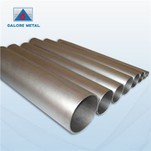
Titanium seamless pipe has the advantages of high temperature resistance, corrosion resistance, high strength and easy cleaning. It is a high-quality material for making heat exchangers and condensers.

Titanium pipe fittings have excellent corrosion resistance in acid, alkali and salt liquids. Scale will not be deposited on the inner surface, has a long service life and is easy to clean. Widely used in petroleum, chemical industry, metallurgy, chemical fiber, chlor-alkali, marine engineering, seawater desalination, sewage treatment and other fields

Condenser Titanium Seamless Tube
Titanium tubes are widely used in heat exchange equipment, such as tubular heat exchangers, coil heat exchangers, serpentine tube heat exchangers, condensers, evaporators, and conveying pipelines. At present, many nuclear power industries use titanium tubes as standard tubes for their units.

Titanium heat exchangers rely on various excellent properties of industrial pure titanium, and are widely used in all kinds of seafood farming, sea water heat exchange, salt water heat exchange, chemical industry, food, medicine, metallurgy, refrigeration, light industry, electroplating industry, aluminum oxidation tank, Industries and fields such as salt, paper, ultrasonic, electronic communication, central heating, etc.

Medical Small Diameter Titanium Tube
Titanium materials are widely used in human implants. Our medical titanium materials have the advantages of high purity and high precision, which fully meet the medical titanium material standards. Products are sold to Germany, France, the United States, Turkey, Japan and other places, and have obtained good customer feedback.
When the average person thinks of "oxidation," they think of rust: rusty cars, rusty nails, and so on. With rusty pieces of steel, the oxidation damages the material, penetrating deep into it, and eventually destroying it entirely.
Rust is only one example of oxidation. Some materials, such as aluminum and titanium alloys, oxidize quickly. In the case of titanium, however, instead of the oxidation acting as a destructive layer, the oxide on the surface forms a protective barrier, preventing the oxygen from penetrating deeper into the bulk of the material. The titanium oxide that forms as a thin film on the surface of titanium alloys is a hard, chemically resistant material, which acts as a thin protective layer around the metal.
What's the difference between rust and the protective oxide layer? Rust tends to not form a cohesive layer on the surface. When steel rusts, the oxide layer expands and is not bonded well with the layer beneath and flakes outward, exposing fresh steel for an oxide attack. This process continues until the steel has been completely reacted with the oxygen and corroded away.
With titanium alloys, the oxide maintains the existing cohesive bonding to the layers under the oxide layer, meaning it does not flake off and oxygen can not reach the un-oxidized metal beneath it. Once the surface is completely coated with oxide, the reaction has been run to completion, and no further oxidation can occur.
In the harsh environment of the human body, any implant is subject to corrosion. The human body is practically a saltwater bath of varying pH, which wreaks havoc on most materials. Plain carbon steel would quickly rust away, destroying the device and contaminating the body with rust particles. In contrast, titanium alloy parts resist the constant chemical attack of the human body; the device does not deteriorate or generate rust particles that can cause health problems.
Should the thin oxide layer get damaged, the speed at which titanium alloys oxidize means that the oxide layer will quickly regrow, even while immersed in the human body. While most implants will never get physically damaged in this manner, some wear surfaces, such as the contacts on replacement joints, could under extreme conditions.
Artificial joint and Medical implant: medical small diameter titanium tube
World population is getting older. We now live in a very active life and desire to be living longer. Injuries caused by hard sports, road traffic and other accidents are everywhere. Obviously, the demand of artificial joint continues to grow. Titanium and its alloys have been commonly used to fabricate implant devices such as: artificial hip joints, artificial knee joints, bone plates, screws for fracture fixation, cardiac valve prostheses, pacemakers and artificial hearts. Each year more than 100 million patients in the world received replacement therapy and more than 1,000 tones of titanium being implanted into patients' body worldwide.
Mechanically, these metal implants must be formed to certain shape and maintain functions during the usage period. Our daily activities include bending, twisting, squeezing and muscle contraction. These artificial parts must not be deteriorated when subjected to fatigue, abrasion and impact loads. Titanium has 50% less weight and 20% higher strength/density ratio of stainless steel. It is lighter and stronger. When implant inside human body, it will reduce body loads. Patients will feel more flexible and active. There will be stress between artificial part and human body. The so-called interface stress is caused by mismatch of elastic modulus. From table 1, we can see that titanium has lowest elastic modulus among these three materials. The mechanical compatibility of titanium implant and human bone is much better.
Physiologically, the body rejects foreign parts. When use stainless steel and co-alloy as biomaterials, clinical inflammation, redness, and itching often occur after implant operation. Titanium and titanium alloys are well known as biologically inert metal materials. In the immersion environment of human blood they have excellent corrosion resistance. It resists human blood and cell tissue very well, ensuring good compatibility. There is almost no pollution and allergic reactions, which greatly improves the patients' recovery. This is the basis for the widespread applications of titanium.
In general, commercially pure titanium (Cp Ti) is considered as the best candidate because pure titanium has best biocompatibility. But Ti-6Al-7Nb, Ti-13Nb-13Zr, Ti-12Mo-6Zr and Ti-6Al-4V ELI alloy are also widely used in medical implants.
Benefits of Medical Small Diameter Titanium Tube
● Strong
● Lightweight
● Corrosion Resistant
● Cost-efficient
● Non-toxic
● Biocompatible (non-toxic AND not rejected by the body)
● Long-lasting
● Non-ferromagnetic
● Osseointegrated (the joining of bone with artificial implant)
● Long range availability
● Flexibility and elasticity rivals that of human bone
Why Do Doctors Use Medical Small Diameter Titanium Tube in Bone Surgery
The use of metal implants for fracture fixation has allowed providers to maintain anatomic alignment and begin earlier rehabilitation, enhancing functional outcome. Early problems encountered with metal implants included corrosion, insufficient material strength, and breakage. This led investigators to develop new implants with characteristics that could withstand the physical and physiological stresses of internal fixation of fractures.
A desirable implant must have the following characteristics: ductility, strength, stiffness, and biocompatibility. Titanium and stainless steel implants differ in each of these categories, theoretically making them more desirable for different functions or in different anatomic locations. Ductile materials are capable of extreme plastic deformation and energy absorption before fracture. Once implanted, materials are subjected to cyclic forces applied in the axial, flexural, or torsional direction, causing material fatigue. This may cause failure of the implant at loads considerably lower than the tensile or yield strengths of the material under static load.
Titanium, on the other hand, more closely matches the modulus of elasticity of bone. This flexibility may be more conducive to fracture healing in areas where more strain is required for a healing response to develop.
Additionally, titanium alloy is more resistant to cyclic load and notch sensitivity. Titanium has a good clinical track record when used in internal fixation devices for fractures. Previous issues of "cold-welding" of screws to plates when commercially pure titanium was used have been essentially eliminated with the introduction of titanium alloys.
The Difference Between Medical Small Diameter Titanium Tubeand Surgical Steel
Medical titanium tube is less likely to cause an allergic reaction on the skin than surgical steel. Surgical steel contains a small amount of nickel that reacts to the immune system, such as nickel allergy that can be a potential complication of healing up a fresh piercing wound. The good thing about titanium, it is a nickel-free material.
Medical titanium is lighter in weight than surgical steel. Even though they're all silver-coloured, you can always differentiate them by their weight. It makes a huge difference when it comes down to body piercing. Light-weight jewellery helps the healing process of a new piercing, as it won't add extra weight on the wound.
Medical titanium is a firmer and more durable material than surgical steel. If you have titanium jewellery, you'll have peace of mind, as it doesn't rust or tarnish. Titanium is more resistant to corrosion than surgical steel and it's a very strong metal compared with other metals.
Titanium is more expensive than surgical steel. Titanium is more expensive because it has a complicated production process to go through. It's pretty expensive to produce, having a very high melting point is one of the reasons behind this, which needs special applications for this feature. Titanium is a chemical element that can be found in nature, like rocks, soil, and bodies of water, so supply is often lower than the demand as a natural resource.
Titanium is non-magnetic while surgical steel is. This is a trick to tell them. Both of them look silvery, but titanium looks darker. They are quite hard to tell apart just by looking.
Grades of Medical Titanium
Titanium is available in four different pure titanium grades and as many as 25 different alloys. Below is a sample of the kinds of titanium used in healthcare today:
Pure Titanium
The four grades of pure titanium are numbered 1-4, with 1 being the softest and 4 being the strongest. Grades 1, 2, and 4 are most commonly found in modern medical devices. Each is distinguished by its degree of formability and ductility.
Grade 1
Grade 1 titanium consists of pure, unalloyed titanium. It is prized in healthcare for its excellent formability, increased resistance to corrosion, and resilience against impact.
Grade 2
Grade 2 titanium is an unalloyed form of titanium with greater strength than Grade 1.
Grade 4
Grade 4 titanium is another form of unalloyed titanium. Like Grades 1 and 2, it offers enhanced resistance to corrosion, great formability, and high strength.
Grade 5
Grade 5 titanium is an alloy made with 6% aluminum and 4% vanadium. Since it offers superior fracture resistance, it is the most common material used in dental implants.
Grade 7
Grade 7 titanium consists of titanium alloyed with 0.12% to 0.25% palladium. It is more resistant to corrosion than any other titanium alloy.
Grade 9
Grade 9 titanium is an alloy made with 3% aluminum and 2.5% vanadium. It is particularly known for its great mechanical strength.
Grade 11
Grade 11 contains unalloyed titanium as well as 0.12% to 0.25% palladium, much like Grade 7 titanium. It shares many properties with Grade 1 titanium, but it offers superior resistance to corrosion.
Grade 23
Grade 23 titanium is an alloy made with 6% aluminum and 4% vanadium that features extra low interstitial elements. Like Grade 5 titanium, it is also a common choice for dental implants.
Medical Titanium Tube in the Medical Industry
You'd be surprised how titanium is used in human life! As a transition metal, titanium boasts several desirable properties, including high strength, low density, corrosion resistance and thermal resistance, which makes it so suitable for various industrial applications!
Titanium was first discovered by the aerospace industry to create reliable aircraft components but today, there are countless other ways that the titanium rod can be used. The fact that the metal is non-toxic makes it ideal for the medical industry when it comes to joining human bone, either to repair fractures or breaks.
Titanium Joint Replacements.
As a result of titanium being biocompatible, it promotes the joining of tissue and bone without the need for extra adhesive. Another reason why titanium is a preferred metal is to do with the fact that it can resist high impacts and prevent breakage.
Orthopaedic Implants.
1940 saw the development of the titanium plate. Titanium gained popularity with the dental industry before it was introduced to the orthopaedic department in 1950. Titanium is used today for inner body devices (i.E. Heart pacemakers), internal fixation, prosthetics and medical instruments, which makes it one of the most popular metals used in the medical field.
Titanium Dental Implants.
With dental implants, screws that are made from titanium can easily be inserted into the jaw. These screws act as the root of the tooth and blend naturally into the bone. When the implant is set, an artificial tooth can then be inserted- making titanium an easy material to work with.
Titanium Alloys Used In Medicine.
As a pure metal, titanium has a low density to high strength ratio. It also offers a high level of corrosion resistance and is a non-toxic or magnetic transition metal. The elasticity and thermal expansion of the titanium bars offers resemblance to human bone, making it perfect for joint replacements!
Osseointegration.
The term "osseointegration" simply refers to the bone's ability to attach to a metal. As an implant is inserted into a bone, the surrounding tissue becomes very sensitive. Once the implant is exposed to oxygen, a protective oxide layer forms naturally to protect the bone.
The titanium plate is used by the medical field as a result of its metallic properties. Offering resistance to corrosion, tissue and fluid, a titanium tube is accepted by the human body and a high force is required to break it.
Medical Instruments And Devices.
Surgical instruments tend to be made from titanium because they need to resist bacteria. An example of instruments that are used by medical professionals includes surgical forceps and drills which are made from titanium.
Our Factory
Galore Metal Technology is a world-class leading supplier and manufacturer of high-quality titanium products with a history of 10 years. We maintain a complete inventory and production capacity of titanium rolling mill products that comply with ASTM/ASME/DIN/JIS and other standards, including plates/plates, tubes/tubes, fittings, rods/rods, wires, fasteners and forged parts, titanium containers , Heat exchanger equipment, etc. It also specializes in the machining and export of non-ferrous metals, such as zirconium, tantalum, niobium, nickel alloys, etc.


FAQ
Q: How thick is a medical titanium tube?
Q: Is medical grade titanium safe?
Q: What is medical grade titanium used for?
Q: What are the uses of titanium tube in medicine?
Q: What is medical titanium tube made of?
Q: How strong is medical titanium tube?
Q: How long does titanium tube last in the body?
Q: Is medical grade titanium magnetic?
Q: Why do doctors use titanium in bone surgery?
Q: Why is titanium used for knee replacements?
Q: Is titanium stronger than surgical steel?
Q: Is medical titanium pure?
Q: Can medical titanium break?
Q: Is titanium magnetic or not?
Q: Does cold weather affect titanium implants?
Q: How do you know if your body is rejecting titanium screws?
Q: How is titanium tube made?
Q: What makes titanium safer than other metals for use within the body?
Titanium also allows for osseointegration, which is the process of permanently fixing a titanium implant to the skeleton.
This type of procedure is particularly good for joint replacements or amputees because it helps to create a fixed anchor point, which a new limb could be attached – for example.
Q: Why do doctors use metals like titanium?
Q: How do you clean medical grade titanium?
Hot Tags: medical small diameter titanium tube, China medical small diameter titanium tube manufacturers, suppliers, factory, Titanium Plate, Gr2 Titanium Tee, Medical Small Diameter Titanium Tube, , Titanium Titanium Alloy