

Titanium Rods
Galore Metal Technology is a world-class leading supplier and manufacturer of high-quality titanium products with a history of 10 years. We maintain a complete inventory and production capacity of titanium rolling mill products that comply with ASTM/ASME/DIN/JIS and other standards, including plates/plates, tubes/tubes, fittings, rods/rods, wires, fasteners and forged parts, titanium containers , Heat exchanger equipment, etc. It also specializes in the machining and export of non-ferrous metals, such as zirconium, tantalum, niobium, nickel alloys, etc.
Production Technology
We use the most advanced technology in titanium production and testing equipment and hold 13 independent intellectual property rights. We also have R&D facilities and systems that allow us to review suppliers to ensure product quality.
Sales Market
We have been doing business in this way for a long time. After ten years of accumulation, our sales network now covers different regions of the world. We are open-minded and sincerely welcome manufacturers from all over the world to establish business cooperation with us.
-
 Purity Medical Titanium BarPurity medical titanium bar refers to a type of titanium bar that is specifically designed andAdd to Inquiry
 -
 4928 Titanium BarWorldwide, 50% of titanium materials are used in the aviation field. At present, most high-speedAdd to Inquiry
 -
 Russian Standard Titanium Alloy RodBt22 titanium alloy is a Russian standard grade, and the composition is Ti5Al5Mo5V1Cr1Fe.BT22Add to Inquiry
 -
 Titanium Hex and Square BarThe Titanium Hex Bar and square bar for Sale contains a certain amount of elements that stabilizeAdd to Inquiry
 -
4928 Titanium BarWorldwide, 50% of titanium materials are used in the aviation field. At present, most high-speedAdd to Inquiry
-
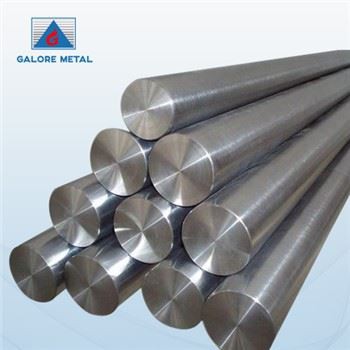 ASTM B348 Industrial Titanium BarTitanium rods are widely used in the global industrial field. We will keep most of theAdd to Inquiry
 -
Purity Medical Titanium BarPurity medical titanium bar is a material used for medical devices, prostheses or auxiliaryAdd to Inquiry
-
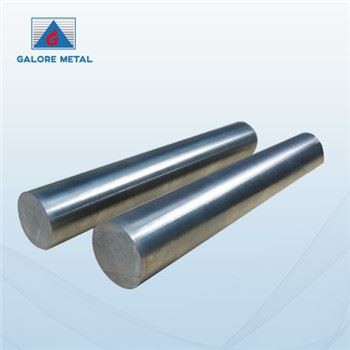 Titanium Alloy Bar 3D PrintingWe supply titanium and titanium alloy rods made by the plasma rotary electrode atomization methodAdd to Inquiry
 -
 Titanium-zirconium-niobium Alloy RodTitanium-Zirconium-Niobium Alloy Rods are often used in the medical field as they can resistAdd to Inquiry
 -
 Pure Titanium Bar Medical UseIntroduction. Medical titanium is used in medical devices, prostheses or auxiliary treatmentAdd to Inquiry
 -
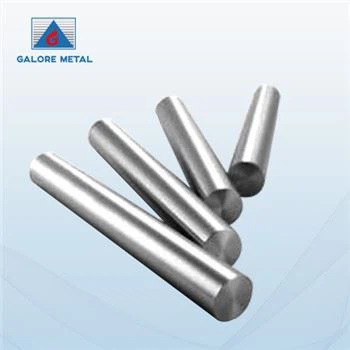 Grade5 Titanium Alloy Bar CNCGrade 5 titanium alloy bar is an ideal material widely used in metallurgy, electronics, medical,Add to Inquiry


Mail: wangwentao@galoremetal.com
Tel: 86-13399271825
Add: No.80 Jintai District, Baoji City, Shaanxi, China
Weight reduction is important in applications, and titanium is one of the lightest metals, making titanium rods the best choice.
High strength: Titanium rods, despite their light weight, have remarkable strength, making them ideal for demanding load-bearing applications.
Titanium's inherent oxide layer offers great corrosion resistance, making it exceptionally durable even in challenging settings.
Titanium is biocompatible, making it appropriate for use in surgical instruments and implants.
Titanium rods have a high melting point and can tolerate high temperatures without compromising their structural integrity.
Titanium is non-magnetic, which makes it a good material for delicate electrical equipment.

The Uses of Titanium Rods in the Aerospace Industry
Titanium rods and titanium sheets are commonly used in the aerospace industry. For example, titanium rods are also used in aircraft frame structures. Furthermore, titanium rods are also used in moving parts of aircraft engines and propellers. To sum up, the aerospace industry is the largest market for titanium rods and their products.
The Uses of Titanium Rods in the Laptop Computer
The reason why many manufacturers use titanium rods is because of their modern and shiny appearance. The notebook computer industry is the largest consumer of thin titanium rods. Many notebook computer manufacturers use titanium and thin titanium rods to varying degrees in the notebook computer manufacturing process.
The Uses of Titanium Rods in Armor Manufacturing
Titanium rods are very lightweight and high in strength, which is the reason why armor manufacturers use titanium rods to make their armor lightweight and easy to wear. Besides, armor manufacturers use titanium rods in different types of applications to reduce weight and make products more durable.
The Uses of Titanium Rods in Sculpture and Architecture
Titanium rods are durable and stylish, making them a popular choice for sculptures. Besides, titanium rods and titanium sheets are used exclusively for skyscrapers and titanium bars are used to support buildings. For example, Italy uses titanium bars to stabilize and support the Leaning Tower of Pisa.
The Uses of Titanium Rods in the Industrial Manufacturing Industry
The industrial manufacturing industry is also one of the major consumers of titanium rods. Titanium's durability, lightweight, corrosion and heat resistance, and cost-effectiveness make it a top priority in the industrial manufacturing industry. For example, various titanium parts are widely used in the industrial manufacturing industry. And titanium is also used in oil mining, power plants, and mining processing plants.
Specifications Of Titanium Rod & Titanium Bar
|
Dimensions |
5-300mm Dia. x 30-5000mm L |
|
Materials |
Titanium |
|
Standard |
ASTM B348 |
|
Purity |
99.9% - 99.999% |
ATT can design and manufacture according to customer's requirements beyond the regular dimension.
Chemical Composition for Titanium Rod & Titanium Bar
|
Grade |
Ti(%,Min.) |
Impurities (%, Max. ) |
Other Impurities |
|||||
|
N |
C |
H |
Fe |
O |
Content per element |
Total content |
||
|
Grade1 |
Residuals |
0.03 |
0.08 |
0.015 |
0.2 |
0.18 |
0.1 |
0.4 |
|
Grade2 |
Residuals |
0.03 |
0.08 |
0.015 |
0.3 |
0.25 |
0.1 |
0.4 |
|
Grade3 |
Residuals |
0.05 |
0.08 |
0.015 |
0.3 |
0.35 |
0.1 |
0.4 |
|
Grade4 |
Residuals |
0.05 |
0.08 |
0.015 |
0.5 |
0.4 |
0.1 |
0.4 |
Titanium Rod & Titanium Bar Properties
|
Molecular Weight |
47.86 (Note: All properties listed are for bulk titanium metal) |
|
Appearance |
Silvery |
|
Melting Point |
1668 °C |
|
Boiling Point |
3560 °C |
|
Density |
4.54 g/cm3 |
|
Solubility in H2O |
N/A |
|
Crystal Phase / Structure |
Hexagonal |
|
Electrical Resistivity |
42.0 microhm-cm @ 20 °C |
|
Electronegativity |
1.45 Paulings |
|
Heat of Fusion |
14.15 kJ/mol |
|
Heat of Vaporization |
425 kJ/mol |
|
Poisson's Ratio |
0.32 |
|
Specific Heat |
0.125 Cal/g/K @ 25 °C |
|
Tensile Strength |
140 MPa |
|
Thermal Conductivity |
21.9 W/(m·K) @ 298.2 K |
|
Thermal Expansion |
8.6 µm·m-1·K-1 (25 °C) |
|
Vickers Hardness |
830–3420 MPa |
|
Young's Modulus |
116 GPa |
Our factory


FAQ
We're well-known as one of the leading titanium rods manufacturers and suppliers in China. Be free to wholesale high quality titanium rods in stock here and get free sample from our factory. Good service and competitive price are available.
Titanium Alloy Bar 3D Printing, Titanium Rods