


Titanium-Zirconium-Niobium Alloy Rods are often used in the medical field as they can resist corrosion and are biocompatible–meaning they can join with human bone. Medical professionals and dentists also use surgical instruments that are made from Titanium-Zirconium-Niobium Alloy Rods.

Russian Standard Titanium Alloy Rod

Titanium Hex And Square Bar

4928 Titanium Bar

ASTM B348 Industrial Titanium Bar

Purity Medical Titanium Bar

Titanium Alloy Bar 3D Printing

Titanium-Zirconium-Niobium Alloy Rod
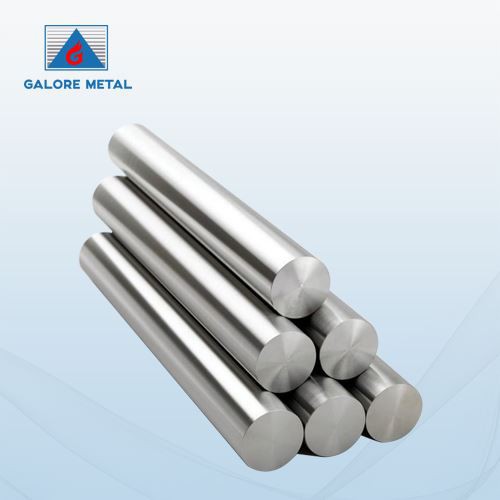
Pure Titanium Bar Medical Use

High Heat Resistance
The use temperature of Titanium-Zirconium-Niobium Alloy Rod is several hundred degrees higher than that of aluminum alloy. It can maintain the required strength at medium temperature, work for a long time at 450-500c, and the specific strength is still very high in the range of 150-500c. The specific strength of aluminum alloy decreases at 150c. The working temperature of Titanium-Zirconium-Niobium Alloy Rod can reach 500c, and the working temperature of aluminum alloy is below 200c.
Good Corrosion Resistance
The corrosion resistance of Titanium-Zirconium-Niobium Alloy Rod in humid atmosphere and seawater is significantly better than that of stainless steel, and it has good corrosion resistance to alkali, chlorine, chlorine, nitric acid, sulfuric acid and other corrosion properties. However, titanium has poor corrosion resistance to reducing oxygen and chromate media.
Good Low-Temperature Performance
The mechanical properties of Titanium-Zirconium-Niobium Alloy Rod can be maintained at low and ultra-low temperatures. Titanium-Zirconium-Niobium Alloy Rods with good low-temperature performance and extremely low gap design elements can maintain a certain plasticity by themselves at -253. Therefore, the development of Titanium-Zirconium-Niobium Alloy Rod is also as an important low-temperature product structure material.
How To Machine Titanium-Zirconium-Niobium Alloy Rod
Use the Right Tools and Equipment
First and foremost, you must ensure that you are using the right tools and equipment for the job. This might sound pretty obvious, but it's a crucial step in any machining process. Titanium-Zirconium-Niobium Alloy Rods are more difficult to machine due to their increased hardness. Always use high-speed steel tools and carbide-tipped bits when cutting titanium. Steel tools will dull quickly when used on this material, while carbide tips cut cleanly and last longer.
Transmit the Generated Heat into the Chip
One important aspect of efficiently machining Titanium-Zirconium-Niobium Alloy Rod is transmitting the generated heat into the chip. This helps to keep the workpiece, the tool, and the coolant fluid at a relatively consistent temperature. The most effective way to do this is to use a horizontal spindle machine for titanium machining. Another thing you can do to transmit the generated heat into the chip is to increase the feed rate for the part. A higher feed rate can help to keep the temperature consistent during the machining process. This can be especially helpful when machining parts with large feature sizes.
Increase Coolant Concentration and Pressure
As mentioned, Titanium-Zirconium-Niobium Alloy Rods have a higher heat conductivity than other metals. Therefore, you should increase the coolant concentration and pressure when machining these materials. Increasing the coolant concentration can help reduce the heat that builds up in the machine. It can also help to keep the workpiece and tool at a relatively consistent temperature, allowing you to increase feed rates for the part. If you are using a water-based coolant, you can increase the concentration of this fluid by adding an antifoaming agent. A good option for an antifoaming agent is sodium salts, which help increase water's boiling point and viscosity.
Avoid Galling
Titanium-Zirconium-Niobium Alloy Rods typically have a lower lubricity than other metals. This means that they are more likely to gall during machining. Galling is a phenomenon that occurs when two opposing pieces of metal come into contact, and one piece becomes trapped between the two. Galling can cause the machining process to become much more difficult and significantly reduce tool life. You can help to avoid galling when machining Titanium-Zirconium-Niobium Alloy Rods by using a smaller feed rate and a lower spindle speed. In addition, if you are already experiencing galling, you can often fix the problem by increasing the coolant concentration. This can help break the existing gall and allow you to continue the machining process.
Medical Applications
The type of Titanium-Zirconium-Niobium Alloy Rod often depends on the severity of injuries and the patient. When replacing broken bones, orthopaedic surgeons usually use Titanium-Zirconium-Niobium Alloy Rods made up of alloys as they provide great strength and stability. An expanding Titanium-Zirconium-Niobium Alloy Rod is used for children's orthopaedics as it can be attached to the joints and stretches with bones as they grow. Expanding rods reduce the need for repeat surgeries. Despite frequently being used for children, they are also an excellent choice for larger bone replacements, i.e. adult leg bones.
Aerospace Applications
Renowned for high strength and low density, Titanium-Zirconium-Niobium Alloy Rod is often found in the structure and skin of aircraft, amongst other aerospace equipment. Titanium-Zirconium-Niobium Alloy Rods are used in this industry to ensure equipment is hardwearing, reliable and can withstand extreme temperatures and speeds.


Automotive Applications
Titanium-Zirconium-Niobium Alloy Rod is supplied for the automotive industry to enhance the performance of vehicles–especially luxury cars and motorbikes. Titanium-Zirconium-Niobium Alloy Rods help to reduce fuel consumption and improve engine efficiency, as well as minimise noise.
Sport Applications
Titanium-Zirconium-Niobium Alloy Rods are found in a range of sports equipment, including bicycle frames, golf clubs and hiking equipment. Titanium's low density makes it easier for athletes to carry their equipment with them, whilst making no compromise to performance.
Frequently Asked Questions
Hot Tags: titanium-zirconium-niobium alloy rod, China titanium-zirconium-niobium alloy rod manufacturers, suppliers, factory, Titanium Alloy Bar 3D Printing, Titanium Rods


