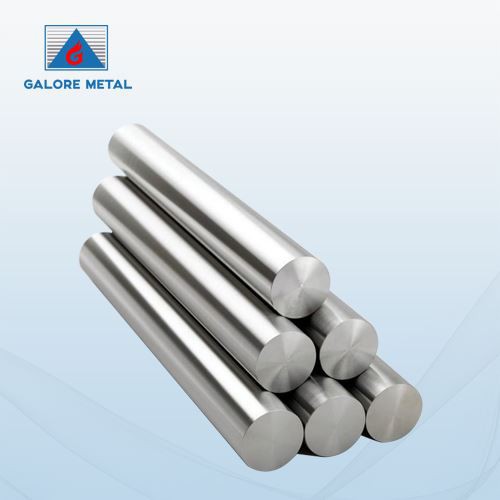
Grade5 Titanium Alloy Bar CNC

Grade5 Titanium Alloy Bar CNC

Grade 5 titanium alloy bar is an ideal material widely used in metallurgy, electronics, medical, chemical, petroleum, pharmaceutical, aerospace and other industries. Due to its suitable size and compact design, it is very easy to process and does not require special maintenance. Compared with ordinary products on the market, its corrosion resistance is 10 times that of ordinary stainless steel.
Send Inquiry
Description
What is Grade5 Titanium Alloy Bar CNC


Grade 5 titanium alloy bar is an ideal material widely used in metallurgy, electronics, medical, chemical, petroleum, pharmaceutical, aerospace and other industries. Due to its suitable size and compact design, it is very easy to process and does not require special maintenance. Compared with ordinary products on the market, its corrosion resistance is 10 times that of ordinary stainless steel.

Features of Grade5 Titanium Alloy Bar CNC


High Strength To Weight Ratio
Titanium alloys are known for their high strength-to-weight ratio, which makes machined parts both light and strong, making them ideal for applications that require weight reduction, such as in the aerospace field.


Corrosion Resistance
Titanium alloys have excellent corrosion resistance and can maintain stable performance in a variety of corrosive environments, including seawater, some organic acids and chloride solutions.


Non-Magnetic
Titanium alloys are non-magnetic, which is important in certain applications such as medical devices and electronics.


Biocompatibility
Grade 5 titanium alloy is also widely used in the medical industry due to its good biocompatibility, such as artificial joints and dental implants.


High Precision
CNC machining uses computers to control the movement of tools and workpieces, allowing high-precision machining. For high-performance materials like Grade 5 titanium, high-precision machining ensures part accuracy and consistency.


Versatility
CNC machining offers the versatility to machine parts of all shapes and sizes, including complex curved surfaces and internal structures. This enables Grade 5 titanium alloy bar to be used in more diverse product designs.


Flexibility
CNC machining can be quickly modified and adjusted according to design requirements without changing processing equipment or tools. This flexibility allows Grade 5 Titanium bar to quickly adapt to market demands and design changes.

How to Choose Grade5 Titanium Alloy Bar CNC


Composition And Properties
Confirm the chemical composition of Grade 5 titanium alloy bar, such as the content of Al and V, which directly affects the mechanical properties and processing performance of the material. Understand the physical and mechanical performance parameters of the material, such as density, elastic modulus, tensile strength, yield strength, etc., to match the specific application requirements.


Cutting Performance
Grade 5 titanium alloy bar has relatively poor cutting performance, and is prone to cutting heat and tool wear. Therefore, it is necessary to select tool materials and cutting parameters suitable for machining titanium alloys. The geometry and coating of the tool also have an important influence on the cutting performance. For example, tools with TiCN or TiAlN coatings can improve cutting life.


Process Parameters
Determine the appropriate process parameters such as cutting speed, feed rate and cutting depth to optimize processing efficiency and processing quality. Adjust the process parameters according to the specific processing conditions and material properties to achieve the best processing effect.

 
Applications of Grade5 Titanium Alloy Bar CNC
 
01/

Aerospace
Grade 5 titanium alloy bars are widely used in the aerospace field due to their high strength, light weight and good corrosion resistance. It is often used to manufacture key components such as aircraft engines, aircraft shells, flight controllers, etc. to improve the performance and life of aircraft.

02/

Medical Equipment
Grade 5 titanium alloy bar is also widely used in the field of medical equipment, such as making skeletons, dental implants, etc. Its good biocompatibility and corrosion resistance make it an ideal material for medical devices. Through CNC machining, high-precision and complex-shaped medical device parts can be manufactured.

03/

Marine Engineering
In the field of marine engineering, Grade 5 titanium alloy is used to manufacture corrosion-resistant equipment and structural parts, such as submersible hull materials, heat exchangers, etc. CNC machining technology can ensure the accuracy and durability of these parts.

04/

High-End Sports Equipment
High-end sports equipment requires lightweight and high-strength materials, and Grade 5 titanium alloy is the ideal choice to meet these requirements. CNC machining can manufacture sports equipment parts of various shapes and sizes, such as bicycle frames, golf clubs, etc.

Frequently Asked Questions

Q: What is Grade5 titanium alloy bar CNC?

A: Grade5 titanium alloy bar CNC is a medium-strength α-β two-phase titanium alloy containing 6% α-stabilizing element Al and 4% β-stabilizing element V. It has excellent comprehensive properties and is widely used in the aviation and aerospace industries.

Q: What are the main chemical components of Grade5 titanium alloy bar CNC?

A: The main chemical composition of Grade 5 titanium bar includes titanium (Ti) balance, and a certain amount of aluminum (Al) and vanadium (V), of which the content of aluminum is between 5.5% and 6.8%, and the content of vanadium is between 3.5% and 4.5%. In addition, it may also contain trace amounts of nitrogen (N), carbon (C), hydrogen (H), iron (Fe), oxygen (O) and other elements.

Q: What safety issues should be paid attention to when processing Grade 5 titanium alloy bar CNC?

A: When processing Grade 5 titanium alloy bar, special attention should be paid to safety issues because titanium alloy easily reacts with oxygen, nitrogen and other elements in the air at high temperature to form a surface hardened layer, which increases the difficulty of cutting and tool wear. At the same time, high temperature and sparks may be generated during the cutting process. Operators should wear protective equipment such as protective glasses and fireproof clothing, and ensure that the processing environment is well ventilated.

Q: How to improve the processing efficiency of Grade 5 titanium alloy bar CNC?

A: There are many ways to improve the processing efficiency of Grade 5 titanium alloy bar, such as optimizing cutting parameters (such as cutting speed, feed rate, cutting depth, etc.), selecting suitable tool materials and geometry, using efficient cutting fluids, and improving the processing environment. In addition, the processing efficiency can also be improved by improving the processing technology and using advanced processing equipment.

Q: How to store Grade 5 titanium alloy bar CNC to avoid corrosion?

A: Although Grade 5 titanium alloy bar has good corrosion resistance, it may still corrode under certain conditions. Therefore, it should be stored away from contact with corrosive substances and kept in a dry and ventilated environment; at the same time, it should be avoided from long-term exposure to high temperature or humid environment to reduce the risk of corrosion.

Q: What factors affect the durability of Grade5 titanium alloy bar CNC?

A: Chemical Composition: The specific balance of titanium, aluminum, vanadium, and other trace elements (such as nitrogen, carbon, hydrogen, iron, and oxygen) in the alloy directly affects its durability. The optimal range of these elements ensures the alloy's resistance to corrosion and other forms of degradation.
Microstructure: The microstructure of the alloy, including the phase composition (α and β phases) and grain size, affects its mechanical properties and resistance to fatigue, creep, and other failure modes.
Heat Treatment: The heat treatment process, including annealing, quenching, and aging, can significantly impact the alloy's microstructure and mechanical properties, thereby affecting its durability. Proper heat treatment can optimize the alloy's strength, toughness, and corrosion resistance.
Machining and Surface Treatment: The quality of machining and surface treatment, such as polishing, shot peening, and coating, can affect the alloy's resistance to wear, corrosion, and fatigue. Rough or damaged surfaces are more prone to degradation.

Q: What are the advantages and disadvantages of Grade5 titanium alloy bar CNC?

A: Advantages: Grade 5 titanium alloy bar has extremely high tensile strength and yield strength, which makes it an ideal choice for manufacturing parts that need to withstand high stress and high load. For example, in the aerospace field, it is used to manufacture key components such as aircraft engine blades and fuselage frames. Secondly, the alloy bar has good resistance to a variety of corrosive media, including many strong acids and alkalis. This makes it perform well in environments such as chemical equipment and marine engineering. In addition, Grade 5 titanium alloy bar can still maintain good mechanical properties and stability at high temperatures, which makes it perform well in high-temperature working environments.
Disadvantages: Although Grade 5 titanium alloy bar has good corrosion resistance, it may still be damaged in certain extreme environments. For example, long-term use in strong oxidizing media may cause the surface oxide film to be damaged, thereby affecting its performance.

Q: What factors affect the service life of Grade5 titanium alloy bar CNC?

A: Material quality: High-quality Grade 5 titanium alloy bar should have uniform chemical composition, good metallographic structure, fine grain size, and low inclusion content. These characteristics help improve the mechanical properties, corrosion resistance and fatigue resistance of the material, thereby extending its service life.
Use environment: Titanium alloy bar may undergo oxidation, creep and other phenomena at high temperatures, resulting in performance degradation. Grade 5 titanium alloy bar will form a protective oxide film when heated for a long time below 430°C, but as the temperature increases, the protectiveness of the oxide film deteriorates, which may affect its service life. In extremely high or low temperature environments, the performance of titanium alloy bar will also be affected, so it is necessary to select the appropriate titanium alloy material according to the specific use environment.

Q: Will Grade5 titanium alloy bar CNC rust?

A: Grade 5 titanium alloy rod (also known as Ti-6Al-4V or TC4 titanium alloy rod) will not rust under normal circumstances. Titanium alloy bar is a metal material with good corrosion resistance and can maintain its performance in a variety of environments. Grade 5 titanium alloy bar further enhances its corrosion resistance due to its high content of aluminum and vanadium elements. However, titanium alloy bar may still corrode under certain specific conditions, but this is not usually called "rusting", but refers to oxidation or chemical attack on the surface of titanium alloys.

Q: How to maintain the corrosion resistance of Grade 5 titanium alloy bar CNC and extend their service life?

A: First, select high-purity raw materials for production to reduce the content of impurities and oxides. Second, avoid exposing titanium alloy parts to strong acid, strong alkali or high humidity for a long time during use. Third, regularly check the surface condition of titanium alloy parts to detect and deal with potential corrosion problems in time. Fourth, take appropriate protective measures when necessary, such as coating a protective layer or using an anti-corrosion agent.

Hot Tags: grade5 titanium alloy bar cnc, China grade5 titanium alloy bar cnc manufacturers, suppliers, factory, Titanium Alloy Bar 3D Printing, Titanium Rods, ,

Send Inquiry

(0/10)

clearall