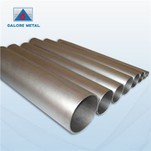
What is Medical Small Diameter Titanium Tube
Medical Small Diameter Titanium Tubes are the ninth most abundant element in the earth's crust and the seventh most abundant metal. Its low density, slightly over half that of steel, and its high strength combination is the reason for the metals growing preference in both military and commercial aircraft. The alloying of Medical Small Diameter Titanium Tube with elements such as aluminum and vanadium increase the strength of titanium while at the same time retains its weight advantage over steel.


Features of Medical Small Diameter Titanium Tube
01/
Lower Density
The density of Medical Small Diameter Titanium Tubes is significantly lower than steel, copper, or nickel products. Despite their low density, they are very strong and rigid when compared to other alloy components.
02/
Resistant to Corrosion
Another benefit of utilizing Medical Small Diameter Titanium Tube is that titanium alloys are resistant to corrosion. This makes these tubes an appealing option if you need a part to work efficiently in a highly corrosive environment.
03/
Resistant to Chemicals
Corrosion is not the only thing that Medical Small Diameter Titanium Tubes are resistant to. They are also resistant to chemicals. These titanium parts can withstand different chemical compounds while still preforming effectively.
04/
Great Heat Transfer Properties
Medical Small Diameter Titanium Tubes have great heat transfer properties thanks to its thermal conductivity and resistance. The same can't be said for copper and carbon steel tubes. Their resistance to heat also allows them to work successfully at temperatures up to 600 degrees or higher.
How to Choose Medical Small Diameter Titanium Tube
Operating Environment of Medical Small Diameter Titanium Tube
The first thing to consider when choosing a Medical Small Diameter Titanium Tube is the operating environment of your heat exchanger. This includes the transferred fluids' temperature, pressure, and corrosive or non-corrosive nature. Titanium is highly resistant to corrosion, which makes it ideal for heat exchangers that handle corrosive fluids. However, titanium has a limited temperature and pressure range, so it's important to choose a tube coil that can withstand the conditions of your operating environment.
Tube Size and Configuration
The second thing to consider is the size and configuration of the tube. Medical Small Diameter Titanium Tubes come in various sizes and configurations, such as U-shaped, straight, and spiral. The tube's size and configuration affect the coil's heat transfer capacity. Straight tubes are more efficient at transferring heat than U-shaped tubes, while helical tubes offer more resistance to fouling. The tube size should also be chosen based on the flow rate of the transferred fluids.
Tube Material and Thickness
The third thing to consider is the material and thickness of the tube. Medical Small Diameter Titanium Tubes can be made from various grades of titanium, such as Grade 2, Grade 5, and Grade 7. Each grade has unique properties, such as strength, corrosion resistance, and thermal conductivity. The tube's thickness also affects the coil's heat transfer capacity. Thicker tubes offer more resistance to corrosion and erosion but have lower heat transfer rates.
Cost & Efficiency
The final thing to consider is the cost of the Medical Small Diameter Titanium Tube. While titanium is an excellent material for heat transfer, it is also more expensive than other materials, such as copper and stainless steel. However, the long-term benefits of using Medical Small Diameter Titanium Tubes in terms of durability, energy efficiency, and cost savings on maintenance and replacement make it a worthwhile investment.
Applications of Medical Small Diameter Titanium Tube
Hydraulic Systems
Medical Small Diameter Titanium Tube is a popular material used in hydraulic systems because of its exceptional durability, ease of fabrication and to efficiently facilitate the inner workings of the system. The tubing has several functions within these systems and provides the much needed support for the structures under the pressure.
Drilling Rig Components
In many of the drilling rigs in the construction and engineering fields, the use of Medical Small Diameter Titanium Tube is an important way to increase rig performance. Drilling any hard surfaces such as granite can be an arduous task and the use of Medical Small Diameter Titanium Tube allows for an extremely fast and secure way to carry on the drilling tasks to those surfaces.


Medical Equipment
Different medical equipment such as endoscopes and laparoscopes have thin Medical Small Diameter Titanium Tube as part of the interface between the body and the equipment. Because titanium is biocompatible , it can be used in these medical equipment in order perform safe surgical and other medical procedures.
Marine Equipments
All marine equipment is subjected to severe stresses such as sea conditions, the pressure and vibrations of the vessels at sea and deep sea water pressure if those equipment required to be submerged. The use of Medical Small Diameter Titanium Tube is one of the ways to minimise the effects of these stresses and to reduce the wear and tear on the equipment.
How to Maintain Medical Small Diameter Titanium Tube
Surface Treatments
Numerous surface treatments are applied to Medical Small Diameter Titanium Tube for a variety of reasons. The prevention of galling and the improvement of corrosion, being perhaps, the most important reasons.
Prevention of Galling
Galling not only causes excessive wear on Medical Small Diameter Titanium Tube but may also result in accelerated corrosion through fretting action. Simple lubrication, using graphite or molybdenum disulfide, is often sufficient to overcome galling. It is, therefore, possible to use Medical Small Diameter Titanium Tube for moving parts or for parts in sliding contact with itself or other metals with light to moderate loads. Heavier loads, on the other hand, require hardened Medical Small Diameter Titanium Tube surfaces. Commercially available case hardening techniques, such as plasma spraying, ion implantation, anodising or nitriding, or coating techniques such as hard chromium electroplating or flame spraying of tungsten carbide and other hard, wear-resistant materials, are used. Such surface treatments possess the required qualities of good adherence plus wear and scuff resistance. However, careful consideration has to be given to the compatibility of the treated surface with the corrosive environment to which it will be exposed.
Cleaning Medical Small Diameter Titanium Tube
The efficiency of Medical Small Diameter Titanium Tube surfaces can usually be maintained without elaborate cleaning procedures. There is generally no need to clean for corrosion protection as is sometimes required with stainless steel, nor does the thin oxide surface film in any way combine with cooling water to form heavy mineral deposits as sometimes occurs on copper based alloys. Marine fouling of heat exchanger surfaces is sometimes controlled by chlorine injection. Titanium surfaces are totally unaffected by such treatments. Titanium surface condenser tubing is also kept clean in this way as well as by continuous cleaning systems utilizing rubber balls or nylon brushes, without deleterious effects.
Acid Cleaning
Acid cleaning of Medical Small Diameter Titanium Tube surfaces to remove deposits is sometimes necessary. Conventional acid cleaning cycles can be used provided proper inhibitors are present. Organic inhibitors such as filming amines are not effective with Medical Small Diameter Titanium Tube. Ferric ion as ferric chloride is very effective as an inhibitor for Medical Small Diameter Titanium Tube in acid solutions. As little as 0.1 percent (by weight) ferric chloride will inhibit corrosion of Medical Small Diameter Titanium Tube by hydrochloric acid, for instance. At ambient temperatures, as much as 25 percent (by weight) HCl inhibited with FeCl3 can be safely used on Medical Small Diameter Titanium Tube.
Brush Cleaning
The use of carbon steel wire brushes to remove deposits from Medical Small Diameter Titanium Tube is not recommended. Likewise, carbon steel pipe or tube should not be used to clean out plugged Medical Small Diameter Titanium Tubes. Pickup of imbedded or smeared iron particles from steel can render titanium susceptible to corrosion when the unit is placed back in service. Stainless steel or titanium wire brushes and pipe are preferred. Careful utilization of Medical Small Diameter Titanium Tube's unique properties will provide many years of maintenance-free service for fabricated equipment. Misapplication of Medical Small Diameter Titanium Tube, the use of improper cleaning procedures and other abuses can lead to failure. On the other hand, careful use of some preventive measures, particularly those concerned with corrosion and galling resistance, can significantly extend the useful life of Medical Small Diameter Titanium Tube.
Frequently Asked Questions
Hot Tags: medical small diameter titanium tube, China medical small diameter titanium tube manufacturers, suppliers, factory, Medical Small Diameter Titanium Tube, Titanium Titanium Alloy, Gr2 Titanium Tee, Customized Titanium Mesh,